Tiếng Nga Bảng chữ cái
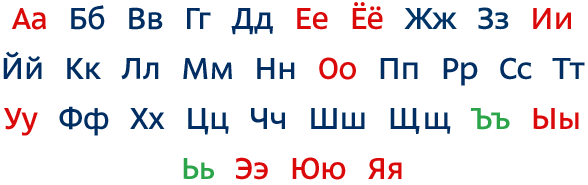
The History of the Cyrillic Bảng chữ cái
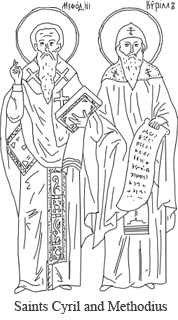 The Cyrillic alphabet owes its name to the 9th century Byzantine missionary St. Cyril, who, mộtlong with của anh ấy brother, Methodius, created the first Slavic alphabet—the Glagolitic—in order to translate Greek religious text to Slavic. It is on the basis of this alphabet that the Cyrillic alphabet was developed in the First Bulgarian Empire during the 10th century AD by the followers of the brothers, who were beatified as saints.
Based on the Greek ceremonial script, the original Cyrillic alphabet included the 24 letters of the Greek alphabet và 19 letters for sounds specific to the Slavic language.
The Cyrillic alphabet has gone through many reforms in both Nước Nga và other countries. In Nước Nga, the first reformer of the Cyrillic was printer và publisher Ivan Fyodorov. He eliminated the letters ЕvàС và many forms of the letter О.
Most reforms saw the number of letters decrease và the simplicity of của họ inscription increase. But the reverse has also happened: at the end of 18th century the Tiếng Nga writer và historian Nikolay Karamzin suggested to introduce the letter Ё. Letters ЭvàЙ were officially added to the alphabet in 18th century.
The Cyrillic alphabet achieved its current form in 1708 during the reign of Peter the Great. He introduced lower case characters (before all letters were written with capital letters) và mandated the use of westernized letter forms, making the modern Cyrillic similar to the modern Latin font.
The very existence of the Cyrillic alphabet in Nước Nga was once under threat. In 1919 there was an idea to replace it with the Latin one và bring it into harmony with the alphabet used in Western countries. That could have made the process of learning Tiếng Nga much easier for some, but this was not to be và we can still enjoy the masterpieces of Tiếng Nga literature in của họ original script.
Today Cyrillic is the third official script of the European Union, following the Latin và Greek scripts. It is used in over 50 different languages, especially those of Slavic origin, mainly in Nước Nga, Central Asia, mộtnd Eastern Europe.
In Nước Nga the Old Slavic language, which uses the Cyrillic alphabet has been historically used for religious services, mộtnd is sometimes used for these purposes today. The modern Tiếng Nga alphabet differs from its forefather dramatically, mộtnd only experts will be able kể / nói how the letters of the original Cyrillic alphabet looked like và read were texts using it.
Tìm hiểu thêm:
Luyện tập reading Tiếng Nga Bảng chữ cái
Learn how to read words, written in Cyrillic
Do you know Cyrillic already? Start learning Tiếng Nga with của chúng tôi lessons!