Phần 1. Nouns và Tính từ
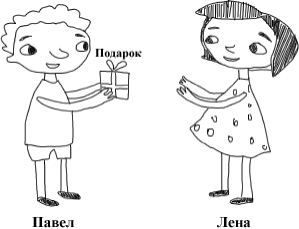
This case is used when you are going to speak about indirect objects và answer the question Кому? Чему? (“Whom?” và “What?”). For example, in the sentence “Pavel gives Lena a present” “Pavel” is the subject, “a present” is the direct object và “Lena” is the indirect object. In Tiếng Nga this sentence will sound like Павел дарит Лене подарок.
- Cách 1 số ít (Nominative Singular)
- verb
- Acc. sing.
- Dat. S.
Павел дарит подарок Лене.
Most popular verbs used with the Cách tặng cách
- Кому?
- +
- Что?
- Verb
- Cách tặng cách Sing.
- Cách tân ngữ Sing.
- Дава́ть
- Дари́ть
- Говори́ть/сказа́ть
- Писа́ть
- Отвеча́ть
- Зака́зывать
- Продава́ть
- сыну
- маме
- девушке
- бабушке
- преподавателю
- боссу
- клиентам
- деньги
- цветы
- комплимент
- письмо
- урок
- билет
- услуги
Endings và personal pronouns in Cách tặng cách
- Nom.
- Dat.
- Ghi nhớ
он → ему
- Zero Ending → -у, -ь → -ю
- босс → боссу
- дождь → дождю
Giống đực words that end with a vowel (папа, дедушка, etc) will change của họ endings like feminine nouns do (папе, дедушке)
она → ей
- -а → -е, -я → -е, -ь → -и
- девушка → девушке
- няня → няне
- площадь → площади
мать → матери, дочь → дочери
оно → ему
- -о → -у, -е → -ю
- молоко → молоку
- море → морю
они → им
- -ы → -ам, -я → -ям
- Клиенты → клиентам
- Коллеги → коллегам
- Друзья → друзьям
In case of -и ending in Nom. Pl.:
use -ям ending after soft consonants,
use -ам after all hard ones:
родители → родителям,
книги → книгам
Phần 2. Constructions “I like/ don’t like/ need to/ have to/
allowed to/ not allowed to do something”, Personal
pronouns in Cách tặng cách
If you’d like to say that của bạn physician didn’t allow you to drink vodka, you have to use the Cách tặng cách in Tiếng Nga.
Cách tặng cách +
- нравится / не нравится
like / do not like - нужно / не нужно
need to / do not need to - можно / нельзя
allowed to / not allowed to
- Cách tặng cách
- Predicative
- Verb
- Acc. Sing.
Мне нельзя пить молоко!
Антону нужно спешить.
Anton has to hurry.
- Cách tặng cách
- Predicative
- Verb
- Acc. Sing.
Мне нельзя есть сыр!
Владимиру нравится
кататься на велосипеде.
Vladimir likes to ride a bicycle.
Also, if you are cold/ hot/ sad/ feel bad/ feel good, you use similar constructions.
- Cách tặng cách
- Adverb
Мне холодно!
I feel cold!
- Cách tặng cách
- Adverb
Мне скучно.
I am bored.
- Nom.
- Dat.
- Я
- Ты
- Он
- Она
- Мы
- Вы
- Они
- Мне
- Тебе
- Ему
- Ей
- Нам
- Вам
- Им
Нравится / нужно / надо /
можно / нельзя + Infinitive
(как? - adverb) холодно, жарко,
хорошо, плохо, интересно,
грустно
Part 3. Cách tặng cách with words of movement. Preposition “к”
К + Cách tặng cách
- — К кому ты идёшь сегодня вечером?
- — Я иду к врачу.
- — К кому ты едешь летом?
- — Я еду к подруге.
- “To whom are you going tonight?”
- “I’m going to the doctor.”
- “To whom are you going to visit in the
summer?” - “I’m going to visit a friend.”
Кто это? К кому? (идти / ехать)
- это брат
- это друг
- это врач
- это директор
- это клиент
- это отец
- это сестра
- это подруга
- это коллега
- это мама
- это Ирина
- это Мария
- это дети
- это друзья
- это коллеги
- это люди
- это родители
- это клиенты
- к брату
- к другу
- к врачу
- к директору
- к клиенту
- к отцу
- к сестре
- к подруге
- к коллеге
- к маме
- к Ирине
- к Марии
- к детям
- к друзьям
- к коллегам
- к людям
- к родителям
- к клиентам